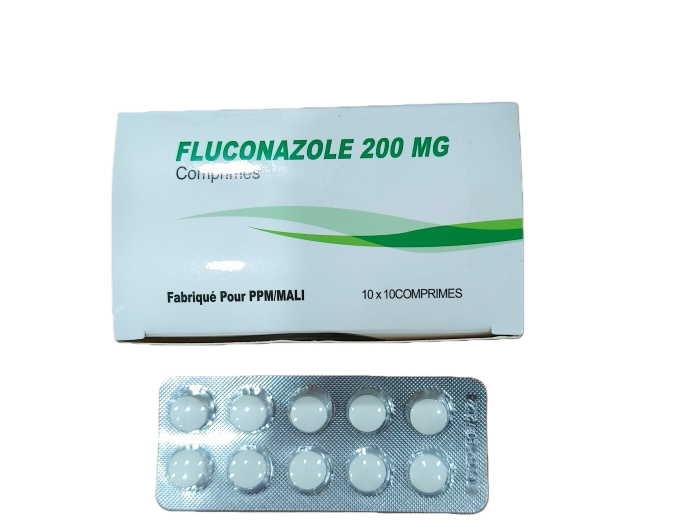
Fluconazole is used to treat serious fungal or yeast infections, including vaginal candidiasis, oropharyngeal candidiasis (thrush, oral thrush), esophageal candidiasis (candida esophagitis), other candida infections (including urinary tract infections, peritonitis [inflammation of the lining of the stomach], and infections that may occur in different parts of the body), or fungal (cryptococcal) meningitis. It is also used in children on life support called extracorporeal membrane oxygenation (ECMO). This medicine works by killing the fungus or yeast, or preventing its growth.
Fluconazole is also used to prevent candidiasis in patients having bone marrow transplants who receive cancer or radiation treatment.
Indication:
Fluconazole is used to treat fungal infections, including yeast infections of the vagina, mouth, throat, esophagus (tube leading from the mouth to the stomach), abdomen (area between the chest and waist), lungs, blood, and other organs. Fluconazole is also used to treat meningitis (infection of the membranes covering the brain and spine) caused by fungus. Fluconazole is also used to prevent yeast infections in patients who are likely to become infected because they are being treated with chemotherapy or radiation therapy before a bone marrow transplant (replacement of unhealthy spongy tissue inside the bones with healthy tissue). Fluconazole is in a class of antifungals called triazoles. It works by slowing the growth of fungi that cause infection.
Usage and Dosage:
Take this medicine exactly as directed by your doctor. Do not take more of it, do not take it more often, and do not take it for a longer time than your doctor ordered. To do so may increase the chance of side effects. This medicine should come with a patient information leaflet. Read and follow these instructions carefully. Ask your doctor if you have any questions. Keep using this medicine for the full treatment time, even if you feel better after the first few doses. Your infection may not clear up if you stop using the medicine too soon. You may take this medicine with or without food.
The dose of this medicine will be different for different patients. Follow your doctor's orders or the directions on the label. The following information includes only the average doses of this medicine. If your dose is different, do not change it unless your doctor tells you to do so.
The amount of medicine that you take depends on the strength of the medicine. Also, the number of doses you take each day, the time allowed between doses, and the length of time you take the medicine depend on the medical problem for which you are using the medicine.
For oral dosage forms (suspension or tablets):
For cryptococcal meningitis:
Adults—400 milligrams (mg) on the first day, followed by 200 mg once a day for at least 10 to 12 weeks. Your doctor may adjust your dose as needed.
Children 6 months to 13 years of age—Dose is based on body weight and must be determined by your doctor. The dose is usually 12 milligrams (mg) per kilogram (kg) of body weight on the first day, followed by 6 mg per kg of body weight once a day, for at least 10 to 12 weeks.
Children younger than 6 months of age—Use and dose must be determined by your doctor.
For esophageal candidiasis:
Adults—200 milligrams (mg) on the first day, followed by 100 mg once a day for at least 3 weeks. Your doctor may increase your dose as needed.
Children 6 months to 13 years of age—Dose is based on body weight and must be determined by your doctor. The dose is usually 6 milligrams (mg) per kilogram (kg) of body weight on the first day, followed by 3 mg per kg of body weight once a day, for at least 3 weeks.
Children younger than 6 months of age—Use and dose must be determined by your doctor.
For oropharyngeal candidiasis: Adults—200 milligrams (mg) on the first day, followed by 100 mg once a day for at least 2 weeks.
Children 6 months to 13 years of age—Dose is based on body weight and must be determined by your doctor. The dose is usually 6 milligrams (mg) per kilogram (kg) of body weight on the first day, followed by 3 mg per kg of body weight once a day, for at least 2 weeks.
Children younger than 6 months of age—Use and dose must be determined by your doctor.
For other infections that may occur in different parts of the body:
Adults—Doses of up to 400 milligrams (mg) per day.
Children 3 months of age and older—Dose is based on body weight and must be determined by your doctor. The dose is usually 25 milligrams (mg) per kilogram (kg) of body weight on the first day, followed by 12 mg per kg of body weight once a day.
Children from birth to 3 months postnatal and 30 weeks gestational age and older—Dose is based on body weight and must be determined by your doctor. The dose is usually 25 mg per kg of body weight on the first day, followed by 12 mg per kg of body weight once a day, for at least 3 weeks.
Children from birth to 3 months postnatal and younger than 30 weeks gestational age—Dose is based on body weight and must be determined by your doctor. The dose is usually 25 mg per kg of body weight on the first day, followed by 9 mg per kg of body weight once a day, for at least 3 weeks.
For prevention of candidiasis during bone marrow transplantation:
Adults—400 milligrams (mg) once a day.
Children—Use and dose must be determined by your doctor.
For urinary tract infections or peritonitis:
Adults—50 to 200 milligrams (mg) per day.
Children—Use and dose must be determined by your doctor.
For vaginal candidiasis:
Adults—150 milligrams (mg) once a day.
Children—Use and dose must be determined by your doctor.
Interaction:
Do not take this medication with any of the following:
This medication may also interact with the following:
This list may not describe all possible interactions. Give your health care provider a list of all the medicines, herbs, non-prescription drugs, or dietary supplements you use. Also tell them if you smoke, drink alcohol, or use illegal drugs. Some items may interact with your medicine.
Side effects:
Side effects that you should report to your care team as soon as possible:
Side effects that usually do not require medical attention (report to your care team if they continue or are bothersome):
This list may not describe all possible side effects. Call your doctor for medical advice about side effects.