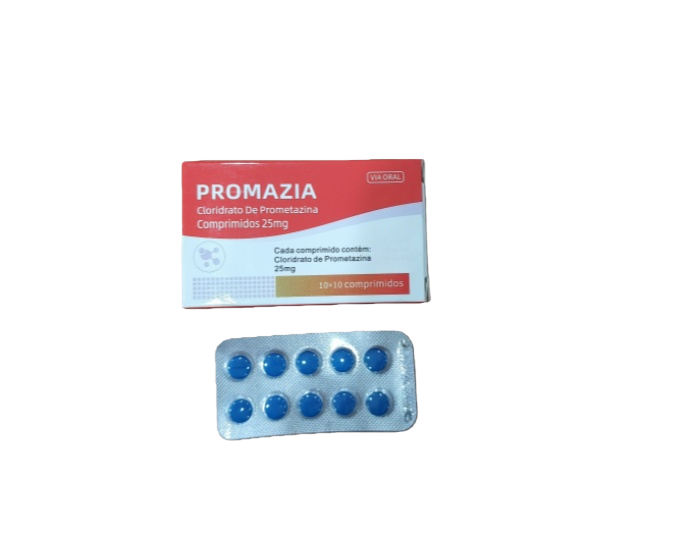
Promethazine Hydrochloride Tablets 25mg

Promethazine Hydrochloride Tablets 25mg

Description:

Promethazine is used to relieve or prevent the symptoms of hay fever, allergic conjunctivitis (inflammation of the eye), and other types of allergy or allergic reactions. It works by preventing the effects of a substance called histamine, which is produced by the body. Histamine can cause itching, sneezing, runny nose, and watery eyes. It can sometimes close up the bronchial tubes (air passages of the lungs) and make breathing difficult .

Promethazine is also used to prevent and control motion sickness, nausea, vomiting, and dizziness. In addition, it may be used to help people go to sleep and control their pain or anxiety before or after surgery or other procedures .

Indications:

Promethazine is commonly used for the following conditions.

Promethazine may also be used for other conditions as determined by your healthcare provider.

Dosage:

The dose of this medicine will be different for different patients. Follow your doctor's orders or the directions on the label. The following information includes only the average doses of this medicine. If your dose is different, do not change it unless your doctor tells you to do so.

The amount of medicine that you take depends on the strength of the medicine. Also, the number of doses you take each day, the time allowed between doses, and the length of time you take the medicine depend on the medical problem for which you are using the medicine.

  • For oral dosage form (tablets):
    • For allergy symptoms:
      • Adults and teenagers—12.5 milligrams (mg) before meals and at bedtime; or 25 mg at bedtime as needed.
      • Children 2 years of age and older—Your doctor will determine dose based on the weight and/or size of the child. The dose is usually 6.25 to 12.5 mg three times a day; or 25 mg at bedtime as needed.
      • Children younger than 2 years of age—Use and dose must be determined by your doctor .
    • For prevention of motion sickness:
      • Adults and teenagers—25 mg twice daily; this initial dose should be taken one-half to one hour before traveling. The dose may be repeated eight to twelve hours later if needed. On other days of travel, 25 mg may be taken on arising and again before the evening meal.
      • Children 2 years of age and older—Your doctor will determine dose based on the weight and/or size of the child. The dose is usually 12.5 to 25 mg one-half to one hour before traveling. The dose may be repeated eight to twelve hours later if needed.
      • Children younger than 2 years of age—Use and dose must be determined by your doctor .
    • For nausea and vomiting:
      • Adults and teenagers—25 mg for the first dose, then 12.5 to 25 mg every four to six hours if needed.
      • Children 2 years of age and older—Your doctor will determine dose based on the weight and/or size of the child. The dose is usually 0.5 mg per pound of body weight (1.1 mg per kg) or 12.5 to 25 mg every four to six hours as needed.
      • Children younger than 2 years of age—Use and dose must be determined by your doctor .
    • For sedation:
      • Adults and teenagers—25 to 50 mg.
      • Children 2 years of age and older—Your doctor will determine dose based on the weight and/or size of the child. The dose is usually 12.5 to 25 mg.
      • Children younger than 2 years of age—Use and dose must be determined by your doctor .
    • For control of pain or anxiety before or after surgery:
      • Adults and teenagers—50 mg the night before surgery; 25 to 50 mg after surgery.
      • Children 2 years of age and older—Your doctor will determine dose based on the weight and/or size of the child. The dose is usually 0.5 mg per pound of body weight (1.1 mg per kg) or 12.5 to 25 mg the night before surgery or after the surgery.
      • Children younger than 2 years of age—Use and dose must be determined by your doctor .

Precautions:

People who are allergic to any of the following should not use promethazine.

  • Promethazine 
  • Phenergan
  • Promethegan
  • Any other medicine known as a phenothiazine
  • Any of the ingredients in the specific product dispensed

Your pharmacist can tell you all of the ingredients in the specific promethazine products they stock.

Children. Promethazine should not be used in any child younger than two years of age. Slow or shallow breathing that can lead to death may occur. 

Lung Problems. Promethazine should not be used if you have asthma or other lung problems. Promethazine can make these conditions worse.

Decreased Awareness. Promethazine should not be used by people who are in a coma or who have decreased consciousness. Promethazine can make these conditions worse.

Side effects:

The most common side effects of promethazine are listed below. Tell your healthcare provider if you have any of these side effects that bother you.

  • Drowsiness or lack of energy
  • Confusion or inability to think clearly
  • Dizziness or coordination problems 
  • Blurred vision
  • Nervousness or trouble sleeping
  • Tremor
  • Dry mouth
  • Nausea or vomiting
  • Hallucinations or feelings of intense happiness, pleasure, and well being
  • Changes in blood pressure or heart rate

More Information

Send Message

    Home Tel Mail Inquiry